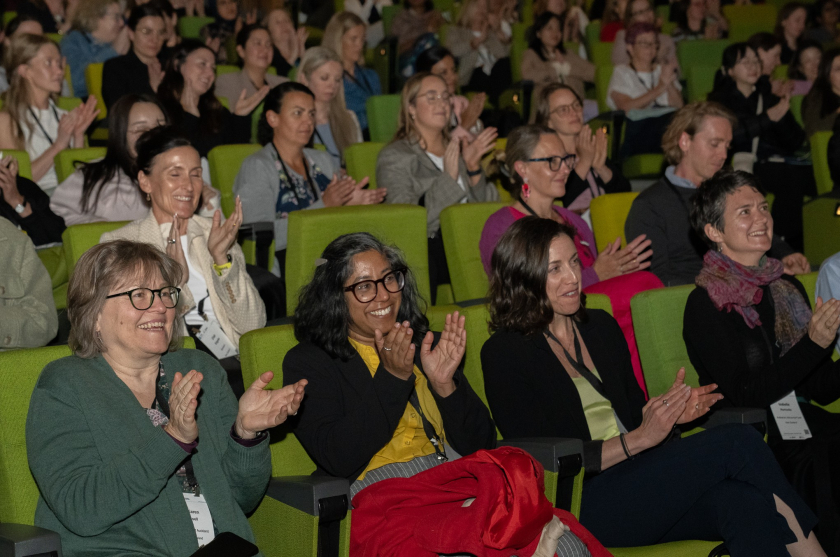
In late October, CEI co-hosted the 2025 Evidence and Implementation Summit (EIS2025). Bringing together 700 participants from 25 nations over three days, EIS2025 advanced our global efforts to bridge the gap between what we know and what we do.
At EIS, diverse participants share breakthroughs and reflect on common challenges across sectors. “EIS is one of my favourite conferences because attendees are so engaged, passionate and focused on creating meaningful impact for the communities they serve,” noted attendee Dr Keri McCrickerd from National University of Singapore.
Trends and themes emerging from the more than 200 presentations, over 60 hours of plenaries and concurrent sessions, were:
The urgent need for focus on scaling and sustainment
Discussions highlighted both the urgency and complexity of scaling – with alignment of politics, systems and partnerships key to getting proven interventions to more people, more quickly.
Multiple discussions and case studies reflected the drive to bring promising initiatives to scale, so they can create greater benefit for more people.
But scaling presents huge challenges – including adapting for different contexts, building the necessary political and system alignment, and maintaining expected benefits in real-world conditions (compared to the more ideal world of trials). EIS2025 offered a valuable opportunity to share insights and compare progress in the science of scaling.
Executive Director of J-PAL Europe, Cillian Nolan, observed in his keynote that since all J-PAL’s work is in the field, there is continual “thinking about messy conditions and what goes wrong. But as we scale things up, many more things will go wrong.”
CEO of Veddis Foundation, Murugan Vasudevan, later highlighted in a panel discussion the “dire, urgent need for funders, researchers, policymakers and philanthropy to… scale now with the evidence we already have.” With an estimated 120 million children in India’s primary school system today, Murugan emphasised that 15 years is simply too long to wait.
But alongside all the challenges, participants described model projects, science-backed frameworks and evidence for factors and conditions likely to contribute to scaling success. “The path to scale is fairly well understood,” noted Dr Ben Tan, Director of Right-Fit Evidence at Innovations for Poverty Action, in terms of the general trajectory and essential ingredients required.
“Success really depends on collaboration… When we start to align those voices early, we design innovations with implementation in mind,” noted Stephanie Mulligan of the NSW Agency for Clinical Innovation. “Scaling isn’t a single discipline, it’s a team sport.”
The necessity of embedding equity
A recurring theme was that equity and lived experience are core to effective implementation – not an add-on. Diverse sources of insight, including First Nations ways of knowing, were a particular focus at this Summit.
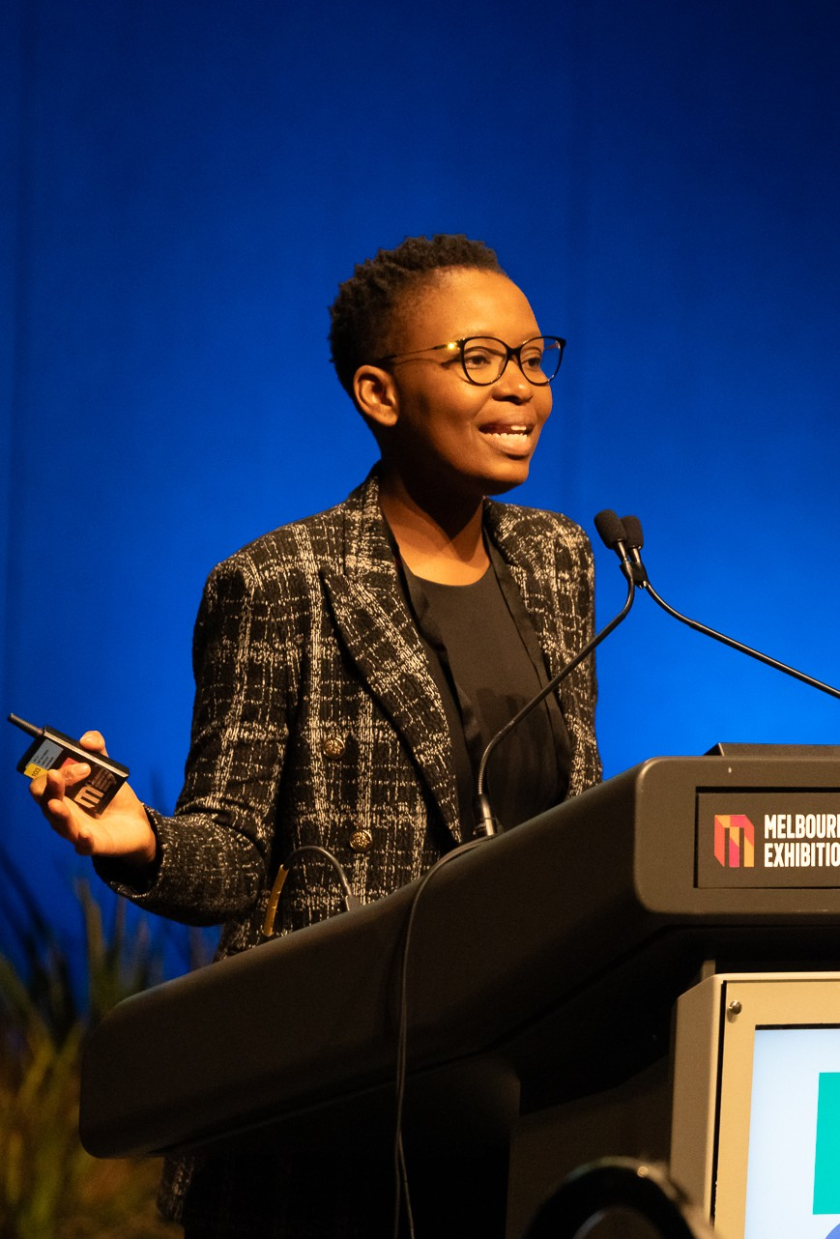
Many sessions centred co-design, co-production, and participatory approaches, with the importance of listening to and being guided by lived experience a key theme across EIS2025 dialogues. Distinguished First Nations health leader Professor Sandra Eades AO set the scene in her keynote: “You really need deep connection and trust relationships with the communities you’re working with.”
Numerous further speakers emphasised that attending to equity in the way we do evidence-to-practice work is key to effective implementation. This doesn’t just mean the way participants are engaged, but extends to how communities’ ways of knowing and doing are reflected in how implementation happens.
For the first time at EIS, an entire session focused on embedding First Nations knowledge, with presentations from Australia, New Zealand and Canada. Other sessions focused on the role of lived experience and shared power in transforming implementation, how to build and measure trust to support change, case studies in equitable implementation practice, and co-design in driving implementation success.
Andile Madonsela, Director of Innovation and Equity at the Pan-African Collective for Evidence (PACE), called out the need to diversify definitions of evidence. “It requires of us to let go of the hierarchies we’ve created… There are many ways of knowing… Evidence looks different in different places and all forms of knowledge matter.”
Many presentations highlighted the value of bringing participatory approaches to the centre of our work – recognising that people are the experts in their own needs. A video address from implementation and healthcare equity expert Associate Professor Ana Baumann (Washington State University) detailed her family’s circuitous journey through the mental health system to illustrate the “mismatch” between what systems are trying to achieve and what people actually need.
“Impact is really hard to define,” said Ana. “If you ask about impact of research for patients, providers, healthcare workers, leaders, policymakers, that narrative might… look different depending on who you ask.” She also pointed to research showing the general absence of children’s and young people’s voices in the development and implementation of healthcare.
“[When] we identify the impact of our work, we really need to think about who is giving input, who is missing and why.”
What does it take to “incrementally and radically” move our systems?
Speakers agreed that system transformation requires us to “do the hard thing”: ask brave questions, look beyond population averages, collaborate openly and curiously across disciplines, analyse all the parts and dive deep into complexity while never losing context.
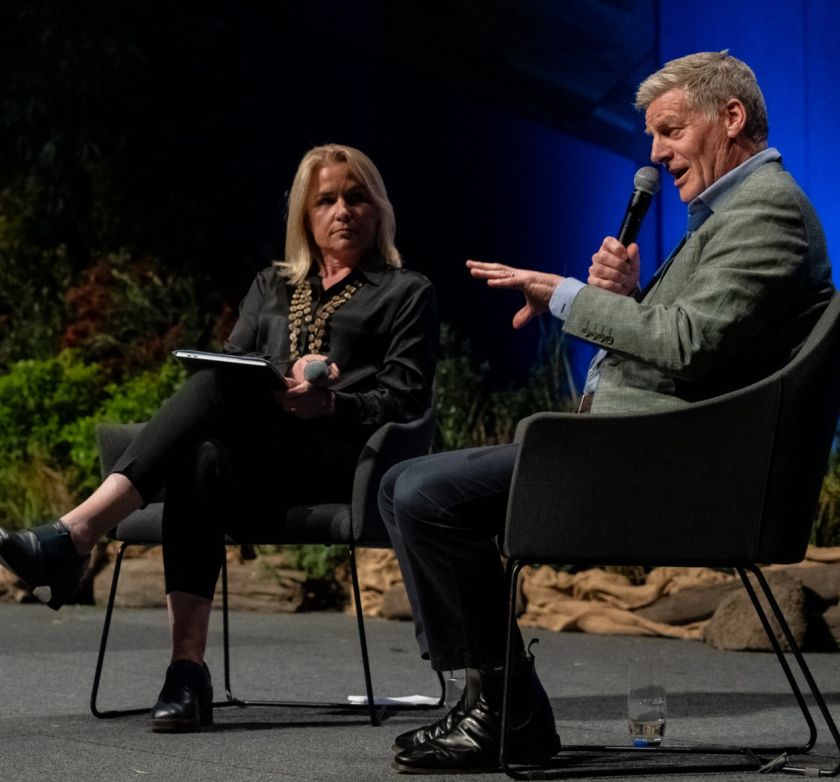
On average, 15% of people are failed by government agencies and programs every single day, said former New Zealand Prime Minister and pioneer of the Social Investment model, Sir Bill English KNZM, in his keynote. Our existing systems, he contends, “were never designed to deal with the complexity” of these individuals and communities – who need bespoke support, generally beyond the remit of universal service systems.
“Averages mean nothing, broad categories mean nothing,” he said. “The question in your mind should always be: ‘which people, where’. And how would anyone know you are making any difference to them?”
Other speakers echoed these insights. “Systems are not one thing. There are always bright spots and dark spots,” noted Dr Caroline Croser-Barlow, CEO of the Front Project, in a panel discussion that delved into the complex realities of evidence use in policy. “We have to do the hard thing, [which is] to iteratively look and analyse all the parts systematically… so we can incrementally and radically move our system.”
Many presenters captured the importance of deep and open collaboration and cooperation across disciplines – and often across sectors – as core to implementation practice and ultimately to system change. A common reflection was that curious, questioning and interdisciplinary conversation can stretch thinking, and offer deeper insights on systems, their functioning and impact.
“We’ve got to lean into complexity and then find our way out, so that we can actually find some solutions. And then we’ve got to lean back into it and not forget that it was complex… and never lose context,” said suicide prevention researcher and Everymind CEO, Dr Jaelea Skehan, in a panel discussion reflecting on the mental health system.
“I’ve really enjoying seeing the discipline [of implementation science] be open to more expanded thinking,” observed implementation scientist Dr Hossai Gul as part of EIS2025’s closing panel reflections. “We don’t have to just sit with existing models, theories and frameworks. We can tweak them, play around with them, change them up, mix them!”
As part of the same discussion, Associate Professor Ingrid Hickman, Principal Research Fellow in Implementation Science at the University of Queensland, reflected on “the eclectic nature of all of us here… [and] the shared responsibility for implementation. Everybody in the… pipeline has a role in implementation science.”
People at the centre
Amid rapid advances in AI transforming the evidence sector, speakers emphasised the human face of implementation – relationships, trust and partnership – as essential to make meaningful, lasting change.
CEO of Future Evidence Foundation, Professor Julian Elliot, addressed the Summit on what he sees as the potential future of evidence in a world dominated by AI. He foresees that policy and practice will change rapidly in coming years, that scholarly communication will increasingly not be a human task, that research will become faster and cheaper, and that “science and evidence will be increasingly contested”.
“Many things will change with AI,” said Julian. “Understanding how those technologies are adopted and used, and how policy and practice should respond to minimise harms and to maximise benefits is… the work of implementation science. So, the world needs all of you more than ever!”
In an increasingly machine-driven world, prioritising human needs and aspirations, collaboration and connectivity, becomes all the more urgent.
“So many of the conversations at this Summit were about the need to keep people at the centre of our work,” noted Mary Abdo, CEI Global Managing Director. “While what we do important, it’s how we do it that really matters – the relationships, the collaboration, the listening to and learning with people. That’s what emerged for me across all the sessions, no matter the sector discussed or where the work is taking place.”
“As AI becomes ever more prevalent and shapes our evidence landscape, we need to double down on what only humans can do: the relational work so fundamental to trust, partnership and transformation.”
Or as attendee Shiva Shangari Manoharan, from Singapore’s National Improvement Unit, noted in a Linkedin post following EIS: “In a field that can feel technical, it’s the human connection that carries the work forward. The people of EIS2025 reminded me that implementation is not just a science it’s a practice rooted in relationships, learning and trust.”
Looking ahead
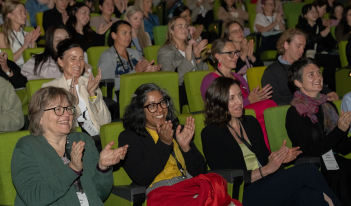
Connection across disciplines is central to the Summit’s lively exchange of ideas.
The 2025 event attracted a record level of interest from presenters and attendees, and we were pleased to collaborate this year with partners from the Implementation Science Health Conference Australia (ISHCA).
Kudos to our many excellent Summit speakers, plaudits to our partners, and thanks to everyone who attended.
Attendees will have continuing access to the recordings of Summit presentations until 30 November 2026. Keep an eye out for videos and other materials we’ll share in coming months, revisiting themes and ideas post-Summit. And the EIS Virtual series of free webinars will continue next year, in the run up to the next Summit in October 2027!
To receive the latest news about the Evidence and Implementation Summit, join CEI’s email list, or check out our Linkedin page, the Summit website and Bluesky channel.


 News 28 Nov 2025
 News 7 Dec 2023
 Event 31 May 2021